Jasscientia.com
Home
2026 Astronomical Events
Monthly Calendar
August 27 Eclipse Info
Space and Rockets
Buzz Aldrin
Halley's Comet
Jupiter & Saturn Conjunction
Lunar Eclipses
Mercury Sun Transit
Our Moon
Solar Eclipses
Space Shuttle
Starlink Launches
Venus
Venus Sun Transit
Victus Nox Launch
Air Shows
A-10 Thunderbolt
C-17 Globemaster
E-2 Hawkeye
F-14 Tomcat
F-15 Eagle
F-16 Viper
F-16 Viper & P-51 Mustang
F/A-18 Super Hornet
F-20 Tigershark
F-22 Raptor
F-22 Raptor & P-51 Mustang
F-35B Lightning
F-111B Aardvark
F-117 Nighthawk
KC-135 Stratotanker
MV-22 Osprey
SR-71 Blackbird
U-2 Dragonlady
U.S. Air Force Thunderbirds
U.S. Navy Blue Angels
Planet Earth
Caduceus
Flowers
Geology
Infrared
Iridescent Clouds
Landscapes
Panoramas
Small Creatures
Unusual Sights
Bio & Email
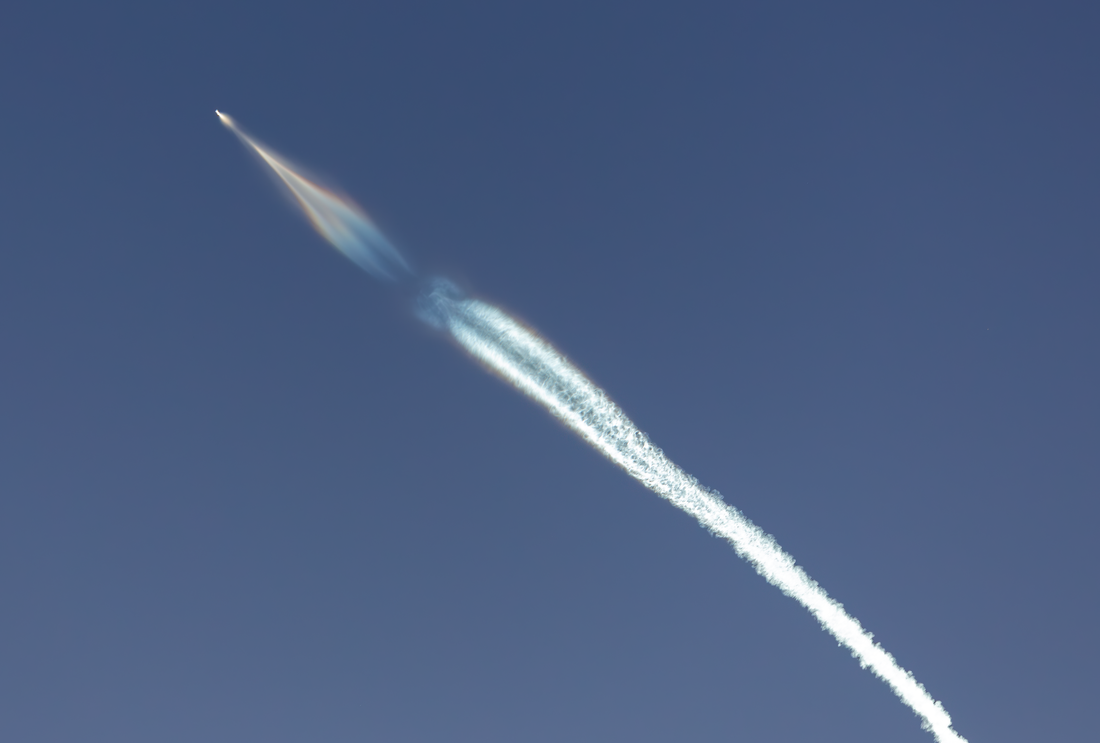
The U.S. Space Force's VICTUS NOX mission launched from Vandenberg Space Force Base in California on September 14, 2023 at 7:28 PM PDT. The mission was a demonstration of the U.S. Space Force's ability to rapidly launch a satellite in response to a national security threat.
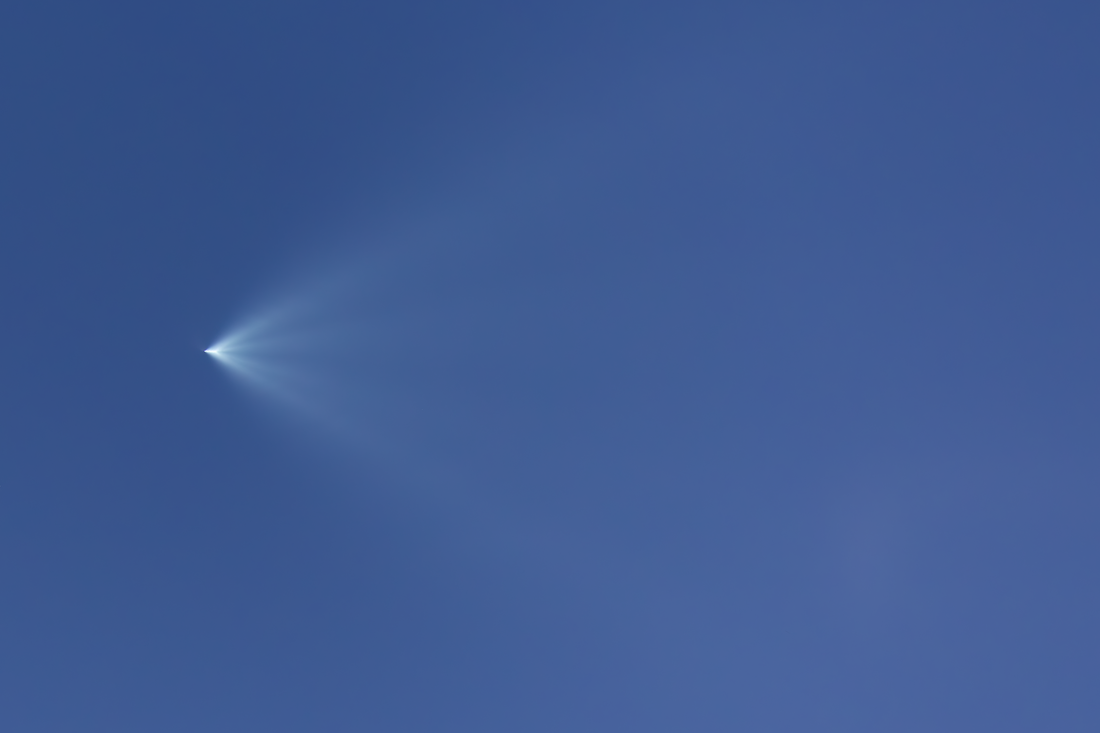
The rocket continues to ascend towards space and a cone of gas is beginning to form, an indication of preparing to drop the first stage engines.
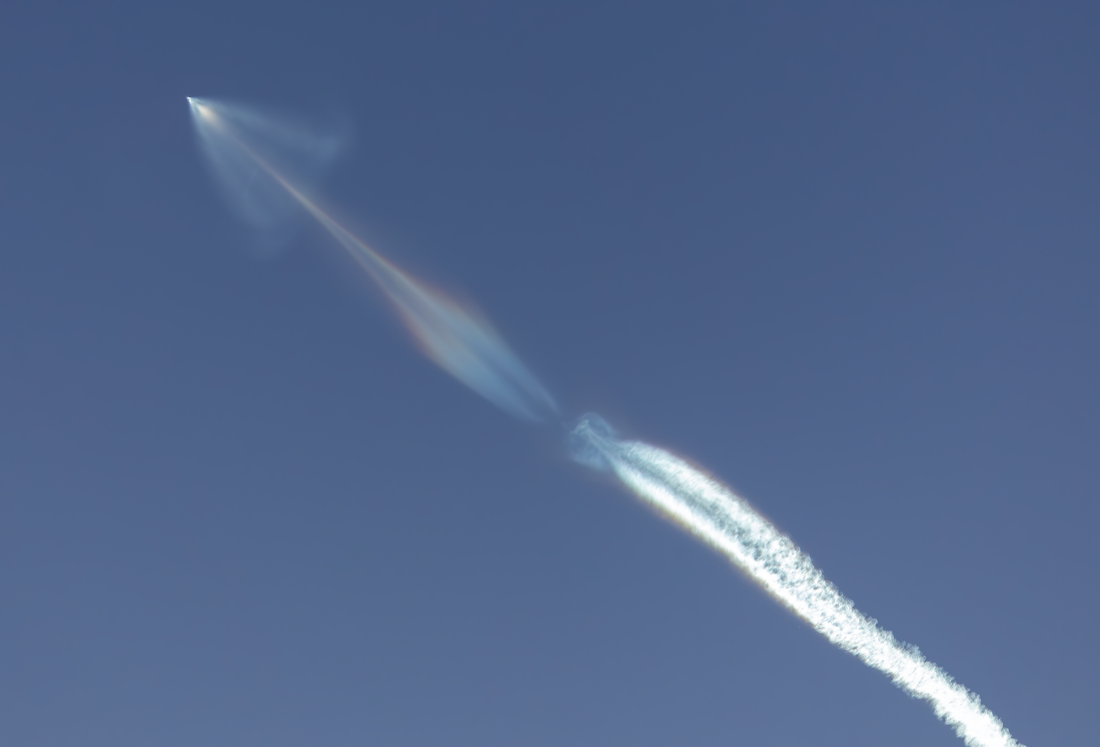
Almost there for first stage release!
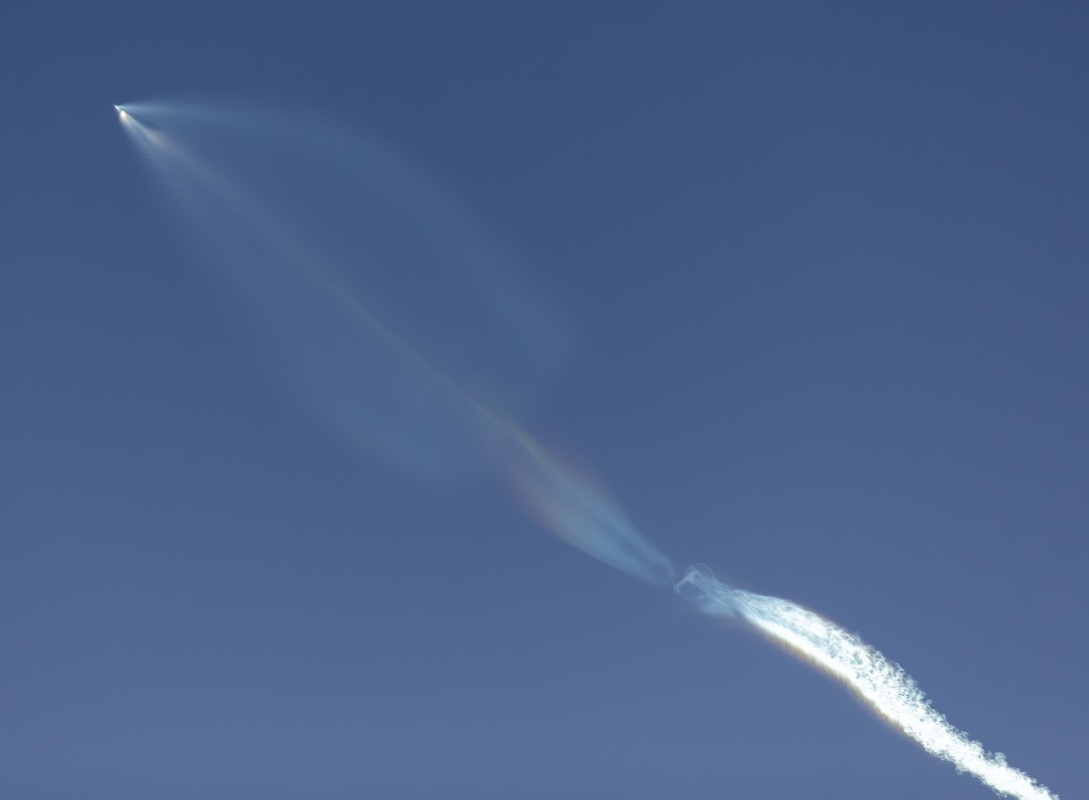
Now we see the first stage rocket released and starting the long fall back to Earth.
As the first stage begins to fall away from the main rocket, we see the spin and rocket fire to get control over the falling stage and help prepare for a landing back at Vandenburg.
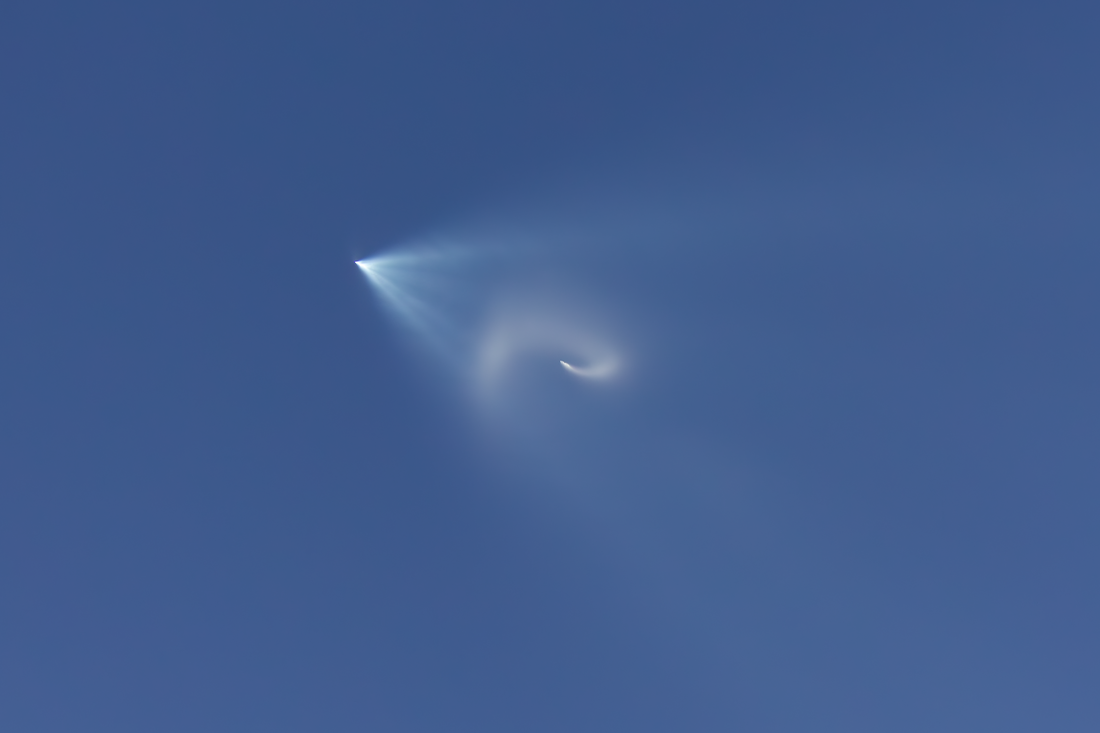
Putting on the speed, we see the main rocket as it heads towards space and the completion of the first Firefly launch!
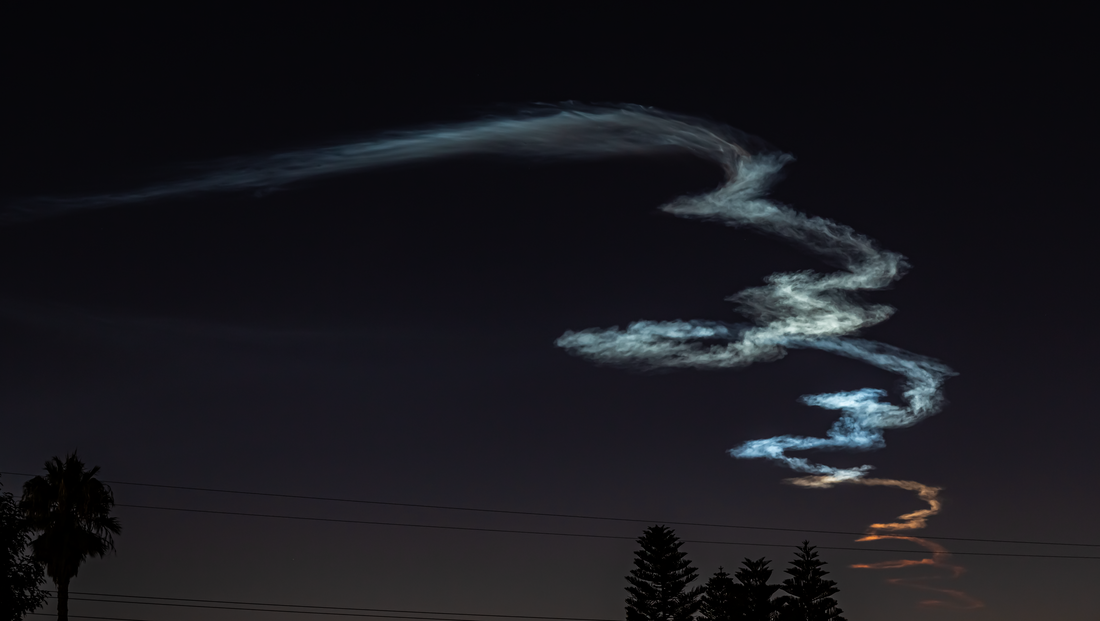
The aftermath of a rocket launch is a breathtaking visual phenomenon that occurs when a rocket’s exhaust plume expands and diffuses in the upper atmosphere. As the plume rises, it contains water vapor that freezes into ice crystals, which act like tiny prisms, scattering sunlight and creating a radiant, glowing trail. This effect is caused by the interaction of sunlight and the darkness of the pre-dawn or twilight sky. As the rocket ascends, it reaches high altitudes where it is still illuminated by the sun, even though the ground below is shrouded in darkness or dim light. The sunlight scatters and reflects off the expanding exhaust gases, producing a glowing effect that spreads across the sky, often displaying soft hues of blue, pink, orange, red, and white.
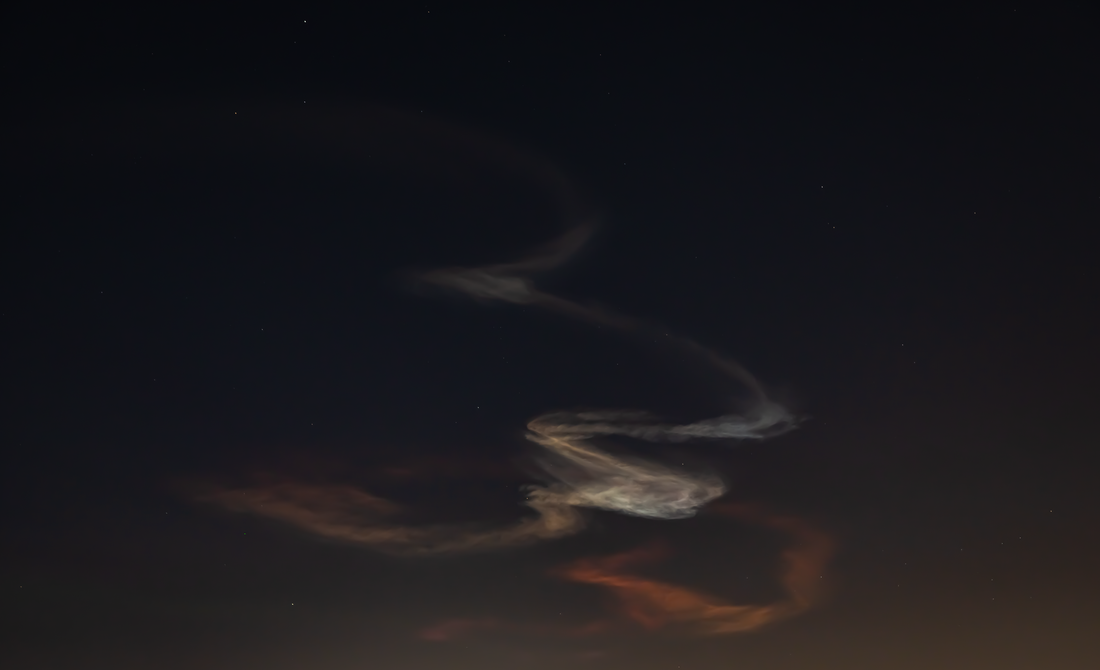
After 30-45 minutes, the gases expand and spread out in the upper atmosphere creating a fading view of colors.
Time-Lapse of Expanding Gases from the launch